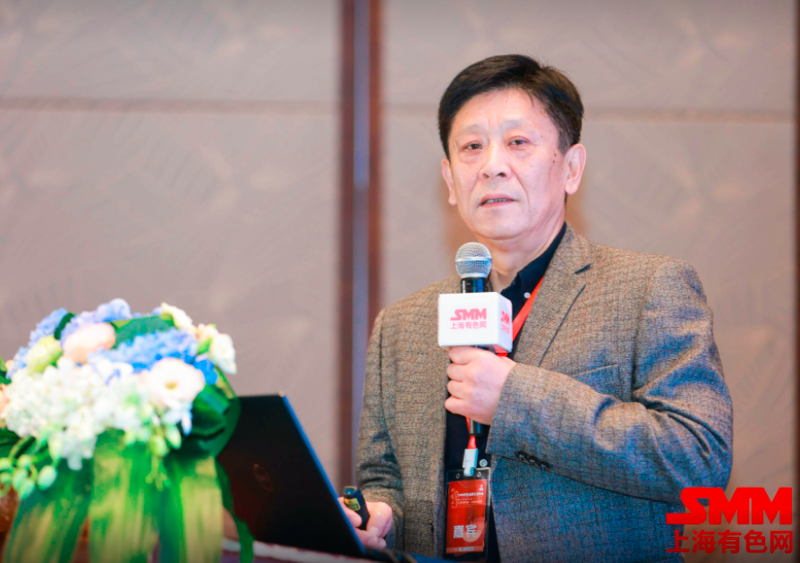
SMM November 16: at the 2021 annual meeting of the non-ferrous metals industry jointly held by Shanghai Futures Exchange and SMM, Yi Xiaobo, former secretary-general of lead-acid battery branch of China Electrical Appliance Industry Association, talked about the history of lead-acid batteries and made some prospects for the development of its product technology in the future. He believes that adding high-energy electrolytes to bipolar batteries is the development direction of lead-acid batteries in the future. However, at present, bipolar batteries are faced with the choice of substrate materials and the thickness of active material coatings. if the battery can be developed within 10 years, the gap between lead-acid batteries and lithium batteries will be sharply reduced or even eliminated.
I. the development history of battery products
In 1836, the Englishman Daniel (Danide) invented the world's first battery-Zn\ ZnSO4,Cu\ Cuso4 primary battery based on the voltaic stack.
In 1859, the Frenchman (Gaston Plante) discovered the reversible stack with lead sheet\ rubber strip\ 10% H2SO4; in 1860, Prandt sent a report to the French Academy of Sciences entitled "A new type of peculiar stack with great power and recoverability", which confirmed the birth of lead-acid batteries. But it was of no practical value at that time.
Until 1881, the British Theron (Sellon) invented the lead-antimony alloy grid, which combined with Fur plaster method to produce the so-called plaster plate. At this point, lead-acid batteries have been really applied and developed.
Second, the development history of China's battery industry.
1. The development of enterprises
In 1911, Shanghai opened a "Ministry of Communications Battery Factory", which was also engaged in the maintenance of automobile batteries. It closed in 1930. In the following years, Shanghai opened a number of battery factories one after another. By the 1960s and 1970s, the state had set up 24 designated enterprises, including Shenyang, Harbin, Tianjin, Zhangjiakou, Baotou, Xi'an, Baoji, Xinyi, Beijing, Zibo, Fengfan, Anyang, Qingdao, Yangtze River Power, Zhenjiang, Shanghai, Changsha, Xiangtan, Chongqing, Guizhou, Kunming, Wuzhou, Guangzhou and Jianyang.
From 1990s to 2003: private enterprises have developed rapidly: there are nearly 3000 battery factories in the country.
Before the environmental protection storm in 2011: there were a total of 1960 battery factories in the country. By 2017, the number of battery manufacturers across the country will be reduced to 343. At present, there are about 240 battery enterprises in China.
2. Product development
Products of the 1950s and 1960s:
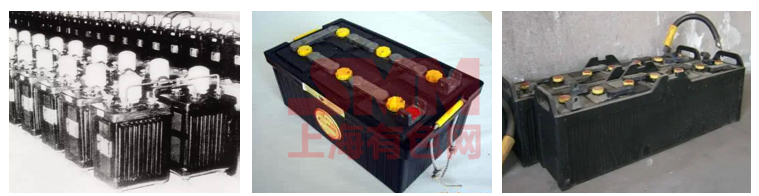 上图是上世纪50~60年代的蓄电池产品,彼时的蓄电池体体积较大,比较笨重,随着后续技术的提升,蓄电池在体积得到压缩的同时,性能也较此前有了极大的提升。
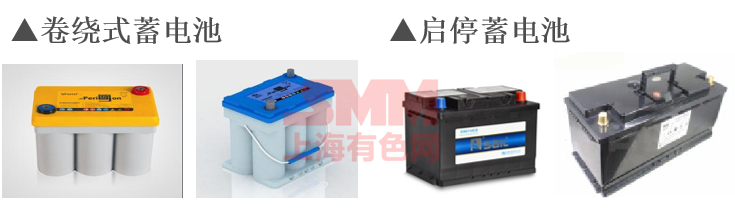
From the 2000's to now, there have been different types of batteries on the market, such as maintenance-free batteries, colloid batteries, winding batteries, start-stop batteries and so on.
Third, the development trend of battery product technology in China.
1. Standard lithium battery
Compared with lithium battery, battery has the advantages of high safety, stable electrochemical system, wide temperate zone, low price, simple maintenance, rich raw material resources and high recycling efficiency.
But the disadvantages are also obvious, such as low energy density, low conversion efficiency, weak fast charging capacity and short cycle life. Obvious defects and domestic policy support for lithium batteries make lead-acid batteries unable to compete with lithium batteries.
2. Product development direction
Bipolar battery with high energy electrolyte is the development direction of lead-acid battery in the future. Specifically,
Bipolar batteries have the following outstanding advantages. However, at present, the research and development of bipolar battery still faces two major difficulties, one is the selection of substrate material, the other is the thickness of active material coating, if the coating thickness is too thick, the corrosion rate will be accelerated. At present, bipolar battery is considered to be the most ideal battery state in the future. If the battery can be developed within 10 years, the gap between lead-acid battery and lithium battery will be sharply reduced or even eliminated.
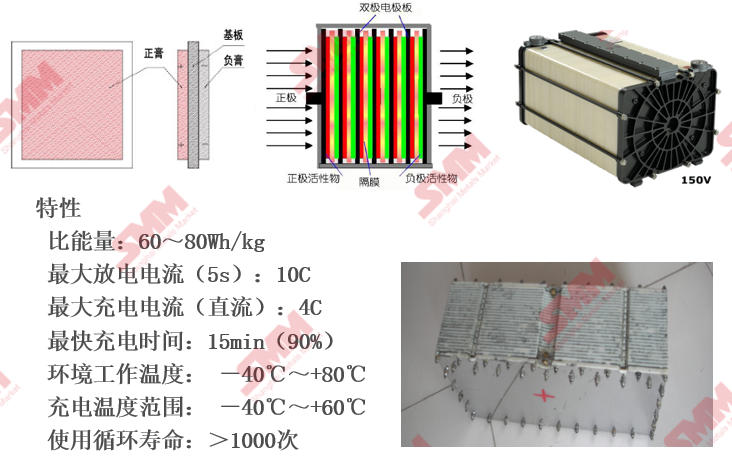
In terms of high-energy electrolytes, dilute sulfuric acid has been used in the electrolyte for more than 100 years, and the biggest change is to add glue that can change the performance of the sulfate carrier, but in fact, there are still many substances that can change the sulfate carrier have not been studied. If the technical conditions keep up, the energy density of lead-acid batteries is expected to reach 100Wh/kg. At that time, the gap between lead-acid battery and lithium battery will be further narrowed.
Therefore, bipolar batteries and high-energy electrolytes are the development direction of lead-acid batteries in the future.
![Imported Refined Lead Arrivals Increase, Smelters Add New Maintenance Plans in April, Lead Prices Are Expected to Maintain a Fluctuating Trend in the Short Term [Brief Commentary on Lead Futures]](https://imgqn.smm.cn/usercenter/LCtEk20251217171721.jpeg)